
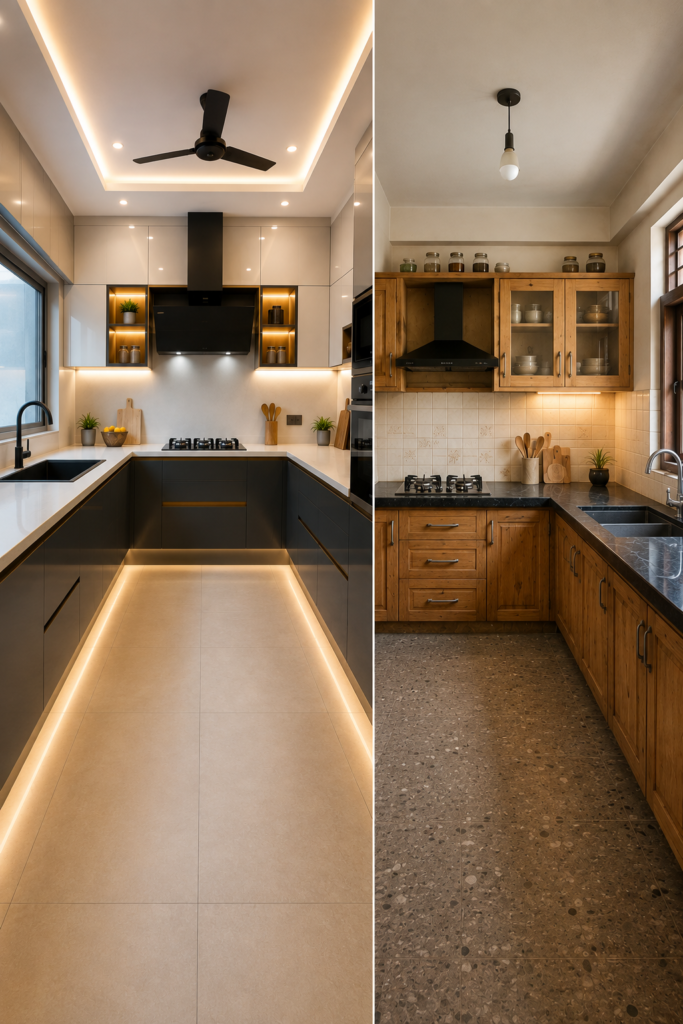
Modular Kitchen vs Carpenter Kitchen: Which Is Better for Your Home?
When planning a new kitchen, one of the first decisions homeowners face is choosing between a modular kitchen and a custom-made kitchen. Both options can create a beautiful and functional cooking space, but they are built differently and offer different advantages.
If you are planning a kitchen in Hyderabad, you may be wondering: Is a modular kitchen better than a carpenter kitchen? The answer depends on your budget, space, design requirements, expected durability and how quickly you want the work completed.
In this guide, we compare a modular kitchen vs carpenter kitchen to help you make a practical decision for your home.
What Is a Carpenter Kitchen?
A carpenter kitchen is generally built directly at your home. The carpenter cuts, assembles and installs the boards, shutters and other components on-site according to the available space.
One of the biggest advantages of a carpenter-made kitchen is flexibility. If your kitchen has unusual corners, pillars, low ceilings or other difficult areas, an experienced carpenter can make adjustments during the work.
However, the final quality can depend heavily on the carpenter’s workmanship and the materials selected. On-site cutting and assembly can also result in more dust, noise and a longer installation period.
A carpenter kitchen can be a suitable option when you have a tight budget, a highly irregular space or need custom woodwork.
What Is a Modular Kitchen?
A modular kitchen is made using individual modules or cabinets that are manufactured according to the approved design and measurements. These modules are then transported to your home and assembled during installation.
Because much of the manufacturing is completed before installation, modular kitchens generally provide more consistent measurements, cleaner finishes and faster assembly.
The modular approach also makes it easier to repair or replace an individual cabinet or module without disturbing the entire kitchen.
For homeowners looking for a modern appearance, organised storage and predictable installation, a modular kitchen can be an attractive choice.
Modular Kitchen vs Carpenter Kitchen: Key Differences
The biggest difference between the two is where and how the kitchen is built.
A carpenter kitchen is largely constructed by hand at the site, while a modular kitchen uses factory-manufactured modules. This difference affects precision, installation time, finish, maintenance and future flexibility.
1. Design and Customisation
Carpenter kitchens offer excellent flexibility for unusual spaces. Since the work happens on-site, modifications can often be made while construction is underway.
Modular kitchens also offer considerable design flexibility, with different cabinet sizes, finishes, storage accessories and layouts available. However, the design needs to be finalised more carefully before manufacturing.
If your kitchen has a straightforward or moderately complex layout, a modular design can provide a clean and highly organised result.
2. Quality and Precision
With a carpenter kitchen, quality depends considerably on the carpenter’s experience, workmanship and the materials purchased.
Modular kitchens are manufactured using machine-cut components, which can provide consistent dimensions and cleaner gaps between cabinets.
This is particularly useful when you want a neat, contemporary kitchen where every cabinet aligns properly.
3. Installation Time
Installation time is another important difference.
A carpenter-made kitchen can require several weeks of work at the site because cutting, assembly and finishing happen inside the home.
A modular kitchen is manufactured beforehand and assembled at the site, which can significantly reduce the amount of on-site work. The reference guide notes approximately 20–35 days for carpenter-built kitchens compared with 3–7 days for modular assembly, although actual timelines depend on the project.
If you want to minimise disruption to your daily routine, faster modular installation can be a major advantage.
4. Storage Efficiency
A good kitchen is not only about appearance. Storage plays an equally important role.
Modern modular kitchens can incorporate tall pantry units, pull-outs, corner storage solutions, drawers and lift-up cabinets. These features help homeowners make better use of available space.
Carpenter kitchens can also be designed with customised storage, but the final functionality depends on the design and execution.
For compact Hyderabad apartments, thoughtful storage planning can make a significant difference to everyday convenience.
5. Hardware and Accessories
Hardware is something you use every day, so it should not be overlooked when comparing a carpenter kitchen vs modular kitchen.
Modular kitchens can be specified with soft-close hinges, full-extension drawers, quality channels, adjustable legs and specialised storage accessories.
When choosing either option, don’t focus only on the shutter colour. Ask about the board material, thickness, edge banding, hinges, drawer channels and warranty.
The kitchen guide recommends getting material grades, board thickness, edge-banding specifications and hardware details clearly mentioned in the quotation.
6. Maintenance and Repairs
Another advantage of a modular kitchen is that individual modules can generally be accessed, repaired or replaced without disturbing the entire kitchen.
With a carpenter-built kitchen, repairing one section may sometimes affect adjoining components depending on how the kitchen was constructed.
This makes modular kitchens particularly appealing to homeowners who want easier long-term maintenance.
Is a Modular Kitchen More Expensive Than a Carpenter Kitchen?
Not necessarily in every situation.
The initial quotation for a carpenter kitchen may appear lower, particularly when basic materials and local hardware are used. However, the final cost depends on the board quality, hardware, finish, countertop, accessories, electrical work and other requirements.
The reference guide’s Hyderabad cost comparison shows that indicative pricing varies significantly by specification, with both carpenter and modular kitchens available across different budget levels.
Instead of comparing only the total price, compare what is included in the quotation.
Check the board grade, shutter material, hardware brand, countertop, backsplash, sink, accessories, installation and warranty before making your decision.
Which Kitchen Is Better for Your Home?
There is no single answer for every homeowner.
A carpenter kitchen may be suitable if:
- You have a very unusual or irregular kitchen space.
- Your budget is limited.
- You need extensive on-site customisation.
- You are working on a temporary or rental property.
- You need specific traditional woodwork.
A modular kitchen may be a better choice if:
- You want a modern and organised kitchen.
- You prefer cleaner and more consistent finishes.
- You want faster installation.
- Storage efficiency is important.
- You want easier module-level repairs.
- You prefer clearly specified materials and hardware.
- You want a kitchen that can potentially be dismantled and relocated.
The right choice ultimately depends on your home, lifestyle and priorities.
How to Choose the Right Kitchen Company in Hyderabad
Before finalising your kitchen, don’t compare companies only on price. Ask for a detailed quotation and confirm exactly what you are getting.
Ask questions such as:
- What board material and grade will be used?
- What is the shutter material?
- Which hardware brand will be installed?
- What is the warranty period?
- Is the countertop included?
- Are sink, backsplash and accessories included?
- What is the installation timeline?
- How will the kitchen measurements be calculated?
- Who will handle after-installation service?
A reliable kitchen provider should be able to explain these details clearly before you make the payment. The reference guide also recommends receiving a 2D layout, 3D design, itemised quotation, material specifications and written warranty documentation.
Modular Kitchen vs Carpenter Kitchen: The Final Verdict
So, modular kitchen or carpenter kitchen—which one should you choose?
If your priority is maximum on-site flexibility and a lower initial budget, a well-executed carpenter kitchen can make sense. If you want consistent finishing, organised storage, faster installation and a more structured approach to materials and hardware, a modular kitchen is often the more convenient choice.
At Intura Design Studio, homeowners can explore modular kitchen solutions as well as customised woodwork and carpentry services based on their requirements. Intura also offers customised interior solutions and has completed residential kitchen and interior projects in Hyderabad. (Intura Design Studio)
Before making your decision, consider your kitchen size, cooking habits, storage needs, budget and long-term plans. The best kitchen is not simply the one that looks good in a showroom—it is the one that makes everyday cooking, storage and maintenance easier.
Planning a modular kitchen in Hyderabad? Start with your space, requirements and budget, then choose a design that works for your lifestyle.
Recommended FAQ section for SEO
1. Is a modular kitchen better than a carpenter kitchen?
A modular kitchen can offer more consistent finishing, faster installation, organised storage and easier module-level repairs. A carpenter kitchen may be better for highly irregular spaces or extensive on-site customisation.
2. Which is cheaper, a modular kitchen or carpenter kitchen?
The cost depends on materials, hardware, finishes, size and accessories. A carpenter kitchen may have a lower starting price, but you should compare complete specifications rather than only the quoted total.
3. How long does a modular kitchen take to install?
The reference guide indicates approximately 3–7 days for modular assembly, although the actual project timeline depends on manufacturing, site readiness and installation requirements.
4. Can a modular kitchen be customised?
Yes. Modular kitchens can be customised through the layout, cabinet sizes, finishes, storage accessories and overall design. Intura states that its designs are customisable according to the client’s requirements. (Intura Design Studio)
5. Which is better for a small kitchen?
A well-planned modular kitchen can be highly effective for a small kitchen because storage solutions such as tall units, drawers and corner mechanisms can help maximise available space.
6. What should I check before buying a modular kitchen?
Check the board grade, shutter material, hardware, edge banding, accessories, countertop, warranty, installation timeline and complete quotation before finalising the kitchen.
